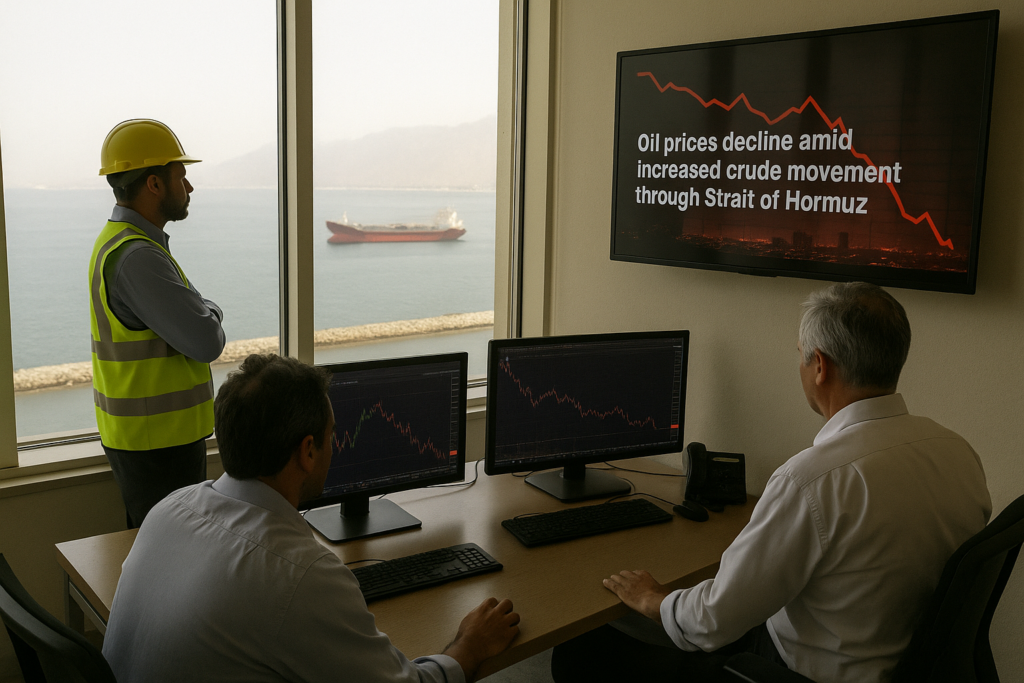
Oil prices fell on Wednesday as traders observed a smoother flow of crude through the Strait of Hormuz, a critical chokepoint for global oil movement. The decline in prices comes amid signals of progress in U.S.-Iran peace talks, which have implications for shipping routes and market stability.
Brent crude and U.S. West Texas Intermediate (WTI) both settled lower, extending a downward trend observed earlier in the week. On Tuesday, crude prices dropped by more than a dollar, reflecting a market focused on the developments in the Strait of Hormuz and the potential for increased oil supply as tankers began to move more freely from the Gulf.
The Strait of Hormuz remains a vital artery for oil transport, with a significant portion of the world’s oil supply passing through this narrow waterway. As traders keep a close eye on shipping flows, the potential for lower oil prices could have far-reaching effects on various sectors, including gasoline, freight, and manufacturing costs.
In Grand Rapids, where the economy is heavily influenced by the healthcare and retail sectors, fluctuations in oil prices can impact operational costs for businesses and consumers alike. Corewell Health, one of the major employers in the region, may face increased expenses related to transportation and logistics if oil prices remain volatile.
The ongoing geopolitical developments in the Middle East, particularly regarding U.S.-Iran relations, will likely continue to affect oil prices and market sentiment. Investors are watching closely for any further developments that could either stabilize or disrupt the current trends in oil supply and pricing.
As the situation evolves, the implications for local economies, including Grand Rapids, will become clearer. Businesses and consumers alike will be affected by the changes in oil prices, making it essential to monitor these developments closely.