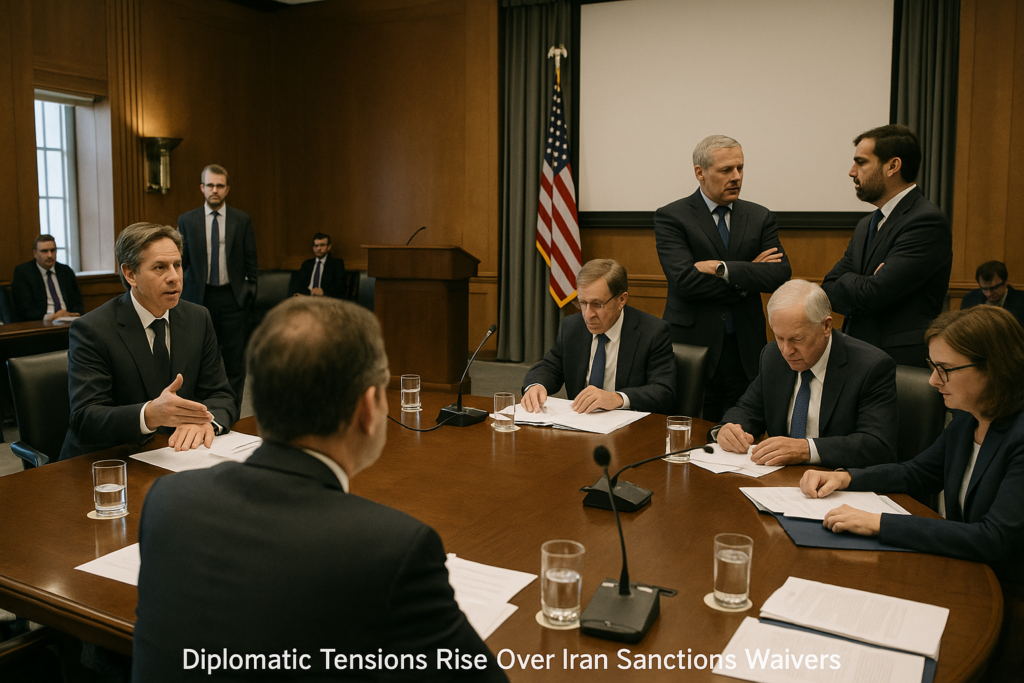
Recent developments in U.S.-Iran relations have brought the issue of sanctions waivers to the forefront of diplomatic discussions. As the United States engages in talks with Iran aimed at de-escalating tensions in the region, the implications of these sanctions on energy markets and international relations are becoming increasingly significant.
Analysts are closely monitoring the situation, as the potential unwinding or extension of sanctions relief poses both legal and political challenges. The complexity of the sanctions issue is tied not only to diplomacy but also to the flow of energy resources, which can impact global markets. The ongoing discussions are expected to shape the future of U.S. foreign policy in the Middle East and influence congressional oversight regarding sanctions enforcement.
Reports indicate that the sanctions waivers are part of broader negotiations that include efforts to stabilize the region following military escalations, particularly around the strategic Strait of Hormuz. This area is crucial for global oil transportation, making the stakes of these negotiations particularly high.
As these diplomatic efforts unfold, the potential consequences for energy markets are a primary concern. The sanctions have historically restricted Iran’s ability to sell oil, which has had ripple effects on global prices and supply chains. Any changes to these sanctions could lead to fluctuations in energy costs, impacting economies worldwide.
The debate over sanctions waivers is not just a matter of international diplomacy; it also raises questions about the effectiveness of sanctions as a tool for achieving foreign policy objectives. Critics argue that easing sanctions could undermine U.S. leverage in negotiations, while proponents believe that engagement could lead to a more stable and cooperative relationship with Iran.
In Grand Rapids, the implications of these developments may be felt in various sectors, particularly those connected to energy and manufacturing. Local businesses that rely on stable energy prices could be affected by any shifts in the market resulting from changes in U.S. sanctions policy.
As the situation evolves, stakeholders in Grand Rapids and beyond will be watching closely. The outcome of these negotiations could have lasting effects on both regional stability and global energy markets, making it a critical issue for policymakers and business leaders alike.