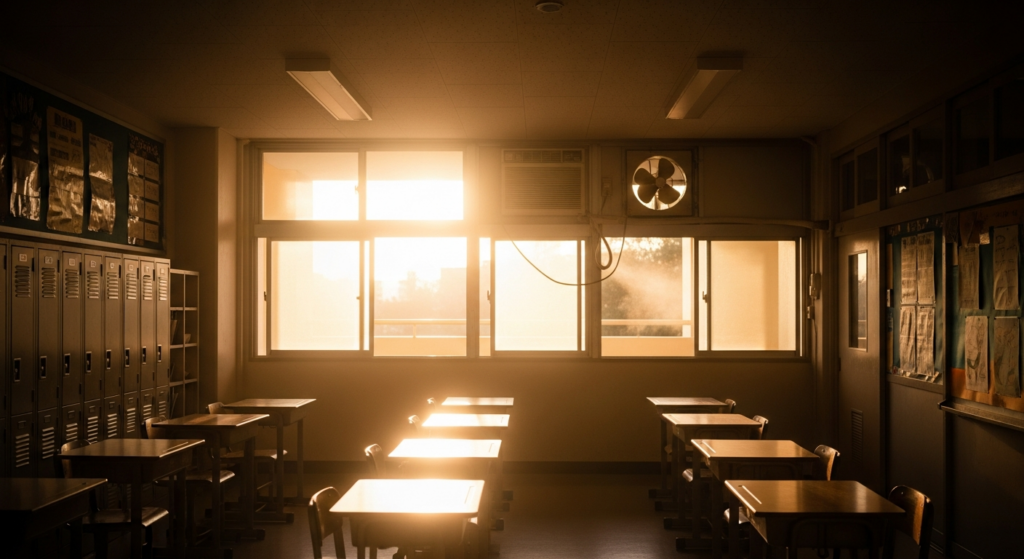
Recent heat waves across the nation have disrupted school operations, prompting a renewed focus on the adequacy of cooling systems and ventilation in educational facilities. This trend, widely reported in national education and news coverage, highlights potential vulnerabilities in school infrastructure when faced with prolonged periods of high temperatures.
The issue extends beyond simple air conditioning. Experts and reporting indicate that effective ventilation systems are crucial not only for comfort but also for maintaining air quality, which can be exacerbated during hot weather. Building readiness for such conditions involves a comprehensive assessment of HVAC (heating, ventilation, and air conditioning) systems, insulation, and overall building envelope integrity.
While specific data for Grand Rapids schools was not detailed in the provided background, the national conversation suggests a need for local institutions to review their preparedness. Schools in Grand Rapids, like others nationwide, may face challenges in maintaining optimal learning environments when temperatures soar. This can lead to altered schedules, early dismissals, or the need for alternative arrangements to ensure student and staff well-being.
The discussion around classroom cooling and ventilation is not new, but the increasing frequency and intensity of heat events underscore its urgency. Reports often point to older buildings as particular concerns, where retrofitting or upgrading systems can be a significant undertaking. The cost and logistical complexities of such improvements are frequently cited as barriers.
Beyond the immediate impact on students and educators, disruptions can have ripple effects. Parents may need to adjust work schedules, and the continuity of educational programming can be affected. The focus on ventilation also intersects with broader public health concerns, as improved air circulation can mitigate the spread of airborne illnesses, a point of emphasis in recent years.
As educational bodies and policymakers grapple with these challenges, the conversation often turns to funding, infrastructure investment, and the development of best practices. The goal is to create resilient learning environments that can withstand extreme weather while ensuring a safe and productive space for education. This involves evaluating current systems, identifying areas for improvement, and exploring innovative solutions for climate control and air quality management.
The situation in Grand Rapids is likely to mirror these broader national discussions. Local school districts and administrators will need to consider the specific conditions of their facilities and the needs of their student populations when addressing the challenges posed by rising temperatures. The long-term implications involve ensuring that educational infrastructure is equipped to handle the demands of a changing climate, thereby safeguarding the educational experience for all.
This renewed attention on classroom cooling and ventilation underscores a critical aspect of educational facility management: ensuring that the physical environment supports, rather than hinders, the primary mission of teaching and learning. The approach to these issues will likely involve a combination of immediate adaptations and long-term strategic planning to enhance the resilience of school buildings.