Idaho Fish and Game says landowner-hunter cooperation is again the front line against elk crop damage across the Magic Valley this fall, with the department running a coordinated depredation-response effort across an eight-county footprint that includes Blaine, Camas, Cassia, Elmore, Gooding, Jerome, Lincoln, and Twin Falls counties.
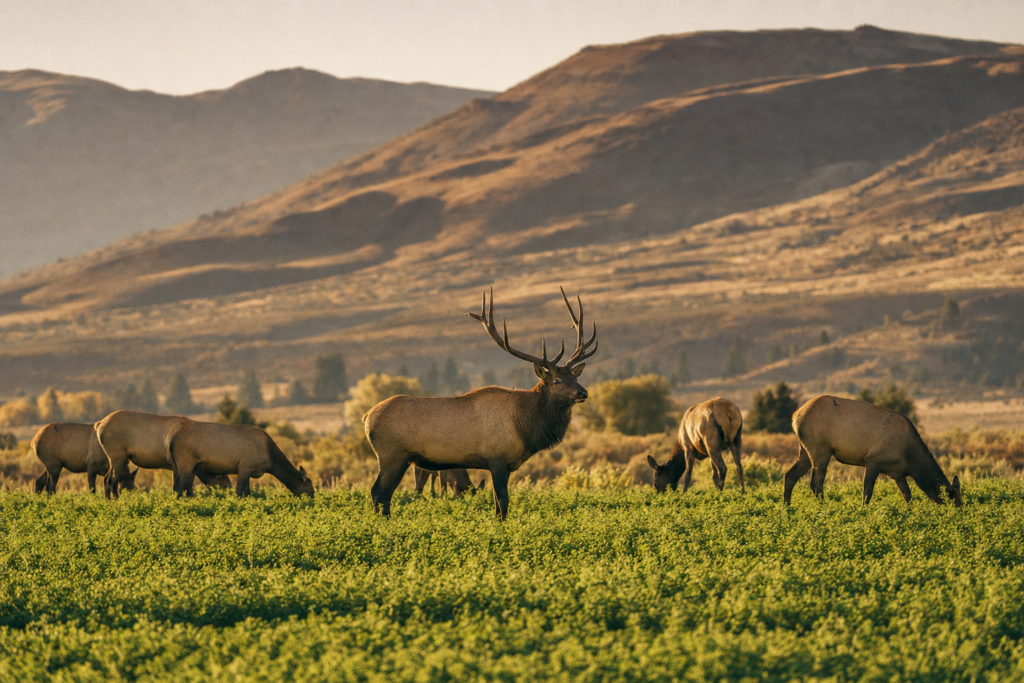
The program pairs conservation officers and regional biologists with property owners whose alfalfa, silage corn, sugarbeet, and grain fields draw elk during late-summer irrigation and again as harvest wraps up. Field staff document damage, help arrange hazing, and — when needed — issue site-specific kill permits or route hunters into problem areas through the department’s landowner-permission and depredation-hunt tools.
Hunting is the leverage point. Statewide elk harvest in 2025 came in at 21,505 animals — a 2.4% jump over the 2024 take of 20,996 and right on the ten-year average of 21,249, according to the agency’s spring harvest recap. General-season hunters accounted for 13,524 of those elk at an 18% success rate, and controlled-hunt tag holders took another 7,981 at 40% success. That combined pull is what the Magic Valley program is trying to steer, without moving elk off public range earlier than needed.
The depredation calendar in the Magic Valley tends to run from late July, when irrigated forage peaks, into November, when grain stubble and cover crops keep herds low on the sage-covered foothills longer than migratory patterns would predict. Fish and Game biologists route calls through regional offices in Jerome and Nampa and log damage complaints into the agency’s shared depredation database so that requests are worked in order and no landowner ends up outside the program.
For hunters, the operational note is that access opens through the property owner and is coordinated through the regional office, not through walk-on requests at the gate. Landowners enrolled in the program share access with vetted hunters against tag types the department has already validated for the affected herd unit, keeping harvest inside the agency’s herd objectives while producers get relief before another winter of standing crop losses.